A single front door for the Claude ecosystem
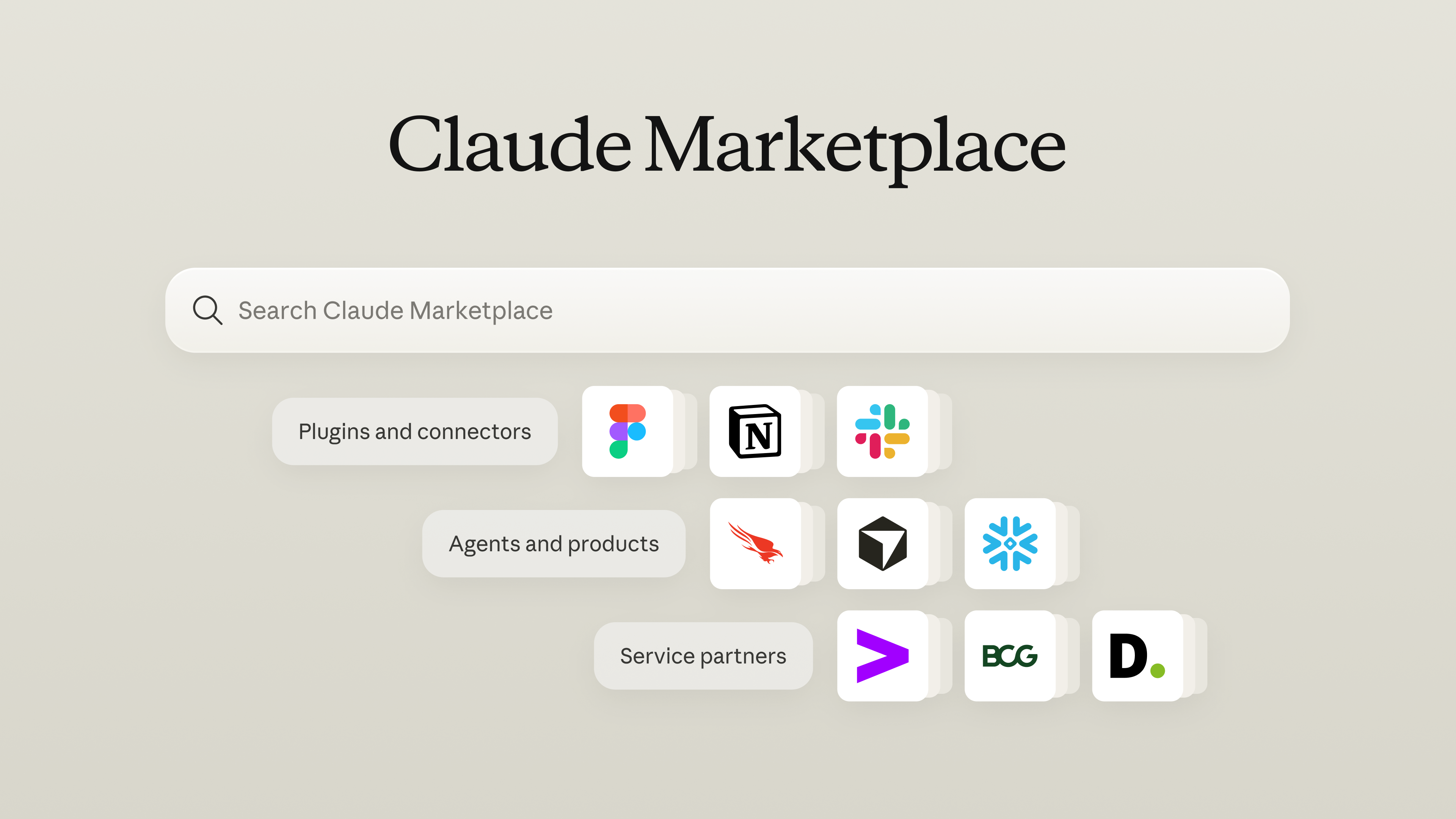
Anthropic has launched Claude Marketplace, a catalogue for finding connectors and plugins, Claude-powered agents and products, and service partners. The Anthropic announcement, dated 23 September, presents it as one place for customers to expand how they use Claude and for builders to reach teams already working with the platform. This is a marketplace and procurement update, not a new Claude model.
Anthropic says more than 2,000 connectors and plugins are available, naming services from Atlassian, Google, Microsoft, Notion and Salesforce among the examples. The breadth is useful for discovery, but a catalogue count does not establish that every integration is maintained to the same standard or permitted in every organisation. Buyers should evaluate the exact connector they intend to enable.
The marketplace also lists products and agents from companies such as CrowdStrike, Cursor, Harvey, Legora, Lovable and Snowflake. Service partners, including large consultancies and systems integrators, form a third route. These are different kinds of offering: one grants Claude access to another system, another buys software, and another provides implementation help. They should not be assessed through one generic approval process.
Discovery is only the first control
A connector can bring valuable context into Claude, but it can also expose sensitive data or permit an assistant to take action elsewhere. Administrators should inspect requested scopes, identity mapping, logging and revocation. A connector that reads a project board is not equivalent to one that can edit records or transmit information to a third party. The marketplace listing should point to those boundaries clearly.
Plugins and skills can also influence an agent’s behaviour. A useful review asks who maintains the package, how changes are signed or published, which tools it invokes and what happens when it fails. The presence of a listing is not a substitute for testing against the organisation’s own data classifications and approval rules.
Anthropic directs builders of team tools to create connectors or plugins using Model Context Protocol and Agent Skills. Open standards can make integration more portable, but they do not remove the need for least-privilege permissions or a clear owner for each integration. Standardising the interface and approving the behaviour are separate decisions.
A new procurement path
Anthropic says customers may use a portion of their committed Anthropic spend to buy participating Claude-powered software. That could simplify purchasing for teams whose AI budget is already allocated, but it is not the same as a blanket discount or a guarantee that every product qualifies. Procurement teams should confirm eligibility, contract terms, support, renewal dates and how spend is counted.
A marketplace can also make it easier for an organisation to compare products built around the same model ecosystem. Yet similarity in model access says little about data retention, hosting region or the controls inside a partner product. Legal and security review should still examine the vendor’s own service, not only Anthropic’s platform terms.
For builders, the opportunity is discoverability among customers already committed to Claude. Applicants should be clear about what their product does, where customer data goes and how pricing works. A vague AI-agent description may attract attention but will slow an enterprise review if the scope of action is unclear.
How to use the marketplace well
An Australian enterprise could begin with one narrow business task and shortlist a connector, a product and a service partner only if each genuinely serves that task. Compare the time saved with deployment effort, user training and ongoing oversight. Ask for a demonstration using representative permissions and error cases, not only a polished happy path.
Maintain a register of enabled connectors and purchased agents, including owner, approval date, scopes and review cycle. Test offboarding as carefully as onboarding: a disconnected integration should no longer receive fresh data or act for former users. Those disciplines become more important as a marketplace makes adding tools easier.
Claude Marketplace may make the ecosystem easier to navigate and purchases easier to coordinate. Its value will be proven when a customer can find a suitable offering, understand the permissions and costs, and operate it safely after launch. The catalogue is a starting point for that decision rather than evidence that every listed tool is ready for every team.
The commercial commitment mechanism also creates a budgeting question. A purchasing team should distinguish money already committed to Anthropic from an incremental obligation to a partner, and ask what happens if the partner service is cancelled or usage exceeds the allocation. Technical owners should be in the same conversation: a convenient procurement path is valuable only if the integration can meet the organisation’s operating and security requirements. Where a listing promises a ready-made agent, request a clear account of its human approval points and failure handling before giving it production data, particularly when it can act across several connected systems.