A stockpile of structural clues
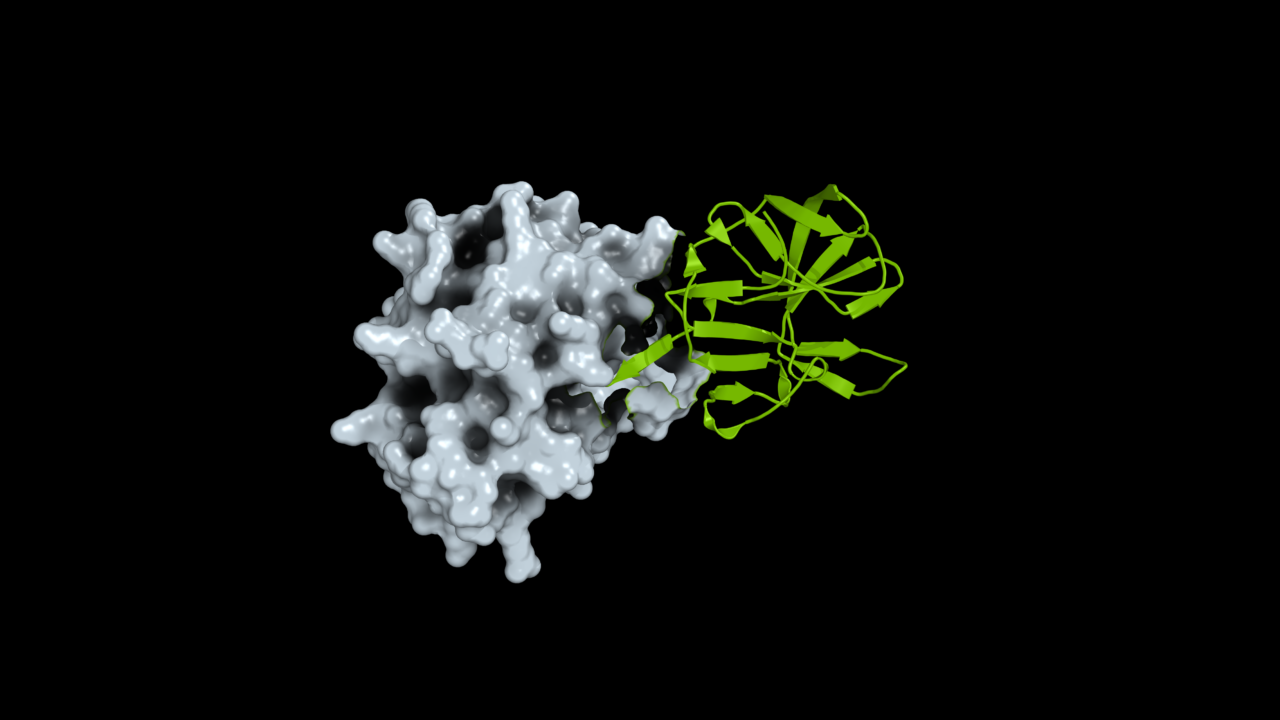
NVIDIA and research partners have opened a collection of predicted three-dimensional protein-complex structures covering more than 2,800 viruses. The NVIDIA announcement, dated 24 September, names Google DeepMind and the European Molecular Biology Laboratory’s European Bioinformatics Institute among the collaborators. Scientists can access the predictions through the AlphaFold Database. The aim is to give outbreak researchers structural clues before the next emergency arrives.
A protein complex is a group of molecules interacting in a shape that can matter for viral behaviour. Some drug and vaccine strategies depend on understanding those interactions, not only the shape of a single isolated protein. By predicting complexes across thousands of viruses in advance, the collaboration broadens what a researcher can inspect when a poorly studied pathogen becomes important.
This is an open-data announcement rather than a clinical result. A model-generated structure is a hypothesis about molecular shape, not proof that a treatment works. Its value lies in speeding the choice of experiments and making structural information available to groups that could not produce every prediction themselves.
How the AI work was scaled
The structures were inferred with AlphaFold2, the Google DeepMind model, using optimisations from NVIDIA BioNeMo Inference Runtime. NVIDIA says the combination let the team process thousands of viral proteomes and predict groups of interacting proteins encoded within each virus. The result illustrates a role for accelerated inference in scientific infrastructure: producing a shared research resource at a scale beyond one laboratory’s immediate needs.
NVIDIA is also releasing the BioNeMo Structure Prediction Pipeline used to generate the data. That offers researchers a route from their own protein sequences to new structural predictions. Access to a pipeline does not remove the need for suitable computing resources, careful inputs and domain review, but it gives others a way to reproduce or extend the approach.
The AlphaFold Database now contains more than 260 million protein and protein-complex predictions, according to the announcement. The new viral collection is one contribution to that broader resource. A scientist still needs to choose a relevant virus, inspect the specific predicted interaction and decide whether its confidence and biological context justify further work.
Novel predictions need scrutiny
NVIDIA reports that roughly 30 per cent of interactions added in this release are not documented in the Protein Data Bank, the repository of experimentally determined structures. That makes them potentially valuable starting points, particularly for lesser-studied viruses. It also means there may be no established experimental structure against which to compare a new prediction directly.
The dataset labels predictions by confidence. Those scores help a researcher triage, but should not be confused with certainty about a virus’s behaviour in people. A high-confidence fold does not establish infectivity, disease severity or whether a proposed drug will work. Structural biology is one piece of a much larger evidence chain that includes laboratory and clinical investigation.
Open access can change who participates. Researchers in lower-resource settings may be able to inspect structural candidates without first building a large prediction cluster. The benefit depends on usable metadata, provenance, documentation and download paths as well as the existence of a model output. Teams should retain the exact database record and pipeline version behind any downstream claim.
Where it may help first
One immediate use is target selection. A laboratory could compare predicted complexes for a virus family, identify an interaction that appears conserved, and decide which molecules to test experimentally. Another is diagnostic research, where structural clues may suggest regions worth examining. These are plausible research workflows, not guarantees of a faster vaccine or an effective medicine.
The release aligns AI tooling with preparedness: spending compute and research effort before a crisis may reduce the time needed to ask useful questions later. Yet an emergency response will still rely on surveillance, sample sharing, wet-lab testing, clinical evidence and public-health coordination. The database does not replace those systems, and public communication should avoid implying that it does.
For NVIDIA, the announcement demonstrates BioNeMo in a substantial collaborative workload rather than only a product demonstration. For scientists, the important deliverables are the openly accessible predictions and the reusable pipeline. Their lasting value will be measured by whether independent groups can validate, extend and use them to make better research decisions when new viral threats emerge.
A research team using these records should distinguish the confidence of a computed structure from the importance of the biological question. A highly confident model of a peripheral interaction may be less useful than a tentative structure for a mechanism worth testing. The open pipeline can help compare candidates, but decisions about experiments still require virology expertise and clear hypotheses.
The same caution applies to comparisons between viruses. Similar-looking complexes can have different roles in different hosts or cell types. When reporting findings, scientists should identify the viral sequences, database entries and validation methods. That provenance allows other groups to reproduce a promising result and keeps public discussion from treating a prediction as a confirmed medical intervention.