
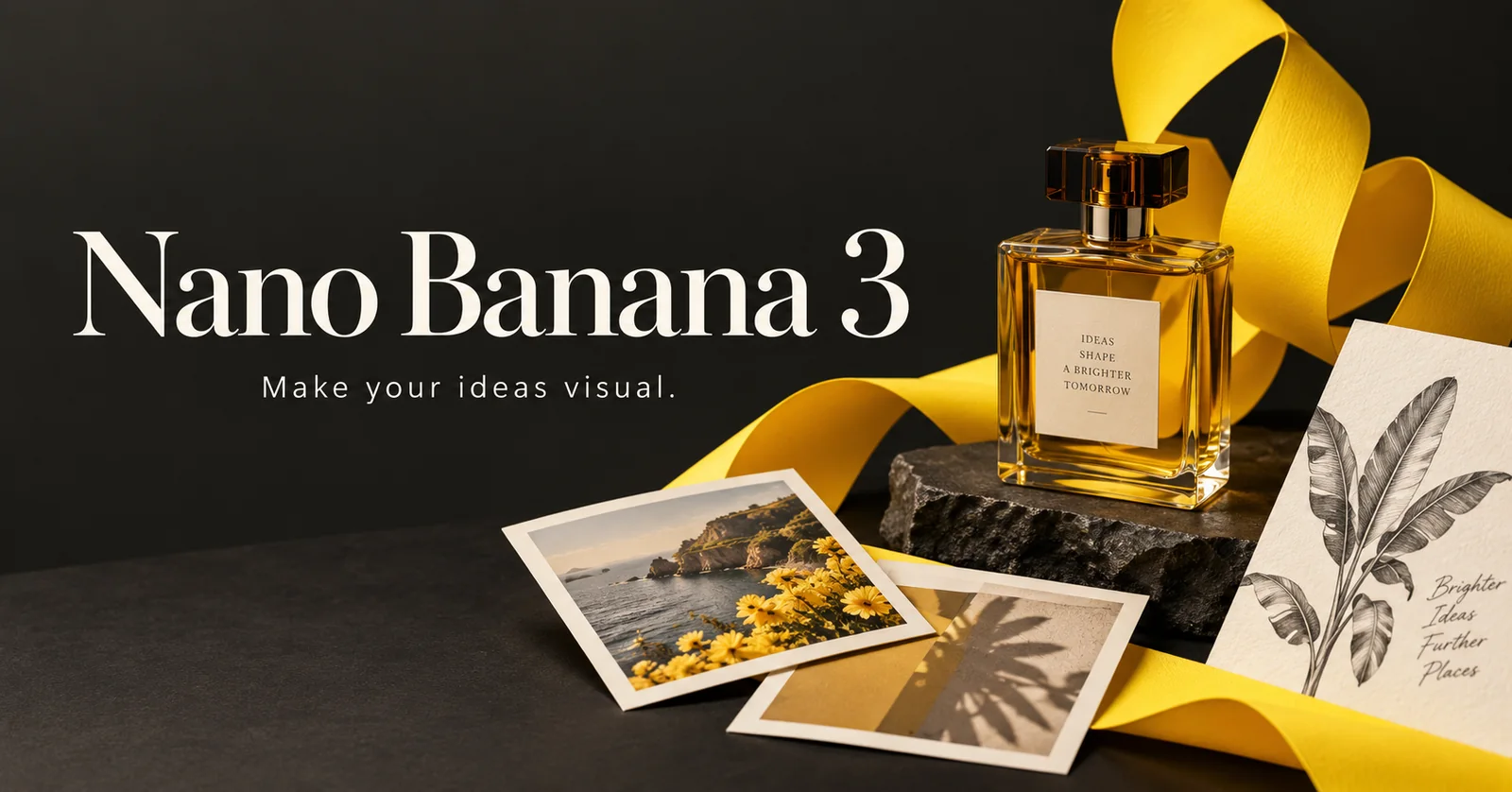
Nano Banana 3 is a web workspace for AI image generation, photo editing and video creation. Users can start with a text prompt or upload reference media, select an available model and refine the result through written instructions. Despite the product name, its workspace exposes multiple image and video models; buyers should treat it as an independent third-party creation service rather than an official Google product.
What it can create
The main workflow is designed for product photography, character development, social graphics, posters, illustrations and marketing assets. A prompt can define the subject, visual style, lighting, framing and text. Reference images can guide a product, person or aesthetic, while editing instructions replace backgrounds, remove objects, change colours or adjust clothing without starting again.
- Text-to-image generation with selectable aspect ratio and resolution
- Natural-language editing of uploaded and generated images
- Reference-guided product and character compositions
- Multiple references for combining subjects and visual direction
- Typography inside posters, labels, invitations and packaging concepts
- Batch generation, history and result downloads
- Separate image and video model options within the same credit balance
Pricing and credit limits
New accounts are advertised with 100 starter credits. Monthly Starter is US$14.99 for 350 credits and up to two concurrent generation batches. Pro is US$39.99 for 1,600 credits, up to four concurrent batches and as many as four results per batch. Premium is US$119 for 5,500 credits and up to eight concurrent batches. Pro and Premium include a commercial licence, subject to the service terms and the user's rights in uploaded material.
Annual billing and one-time credit packs are also offered. The site currently advertises annual savings of up to 50 per cent, but the checkout total should be confirmed before purchase because promotional pricing can change. One-time pack credits are stated to remain valid for 365 days. Generation cost varies by the selected model, resolution and reference inputs, and credits are charged per result rather than simply per submitted batch.
Quality, rights and privacy
Reference-led consistency and text rendering are useful aims, not guarantees. Faces, small product details and typography should be checked across every output, particularly when a campaign relies on a consistent character or exact packaging. A commercial plan does not grant rights to a trademark, celebrity likeness or copyrighted reference that the customer was not entitled to upload.
The workspace includes a public/private control in its creation interface. Anyone using confidential product photography or client assets should verify the default setting, deletion controls, retention period and the downstream model used for a job before uploading source material.
Our assessment
Nano Banana 3 is aimed at creators, ecommerce teams and small marketing departments that want prompt-based generation and editing in one account. It is most appealing when a project needs several variations from the same reference, such as product scenes, social crops or a recurring character. Batch controls and shared credits across enabled models can make experimentation easier than managing several separate services.
The service is less transparent than buying from a named model developer directly. Model availability and per-generation credit charges can change, while the product's branding can make its relationship to underlying models unclear. Before committing to a large plan, teams should run representative jobs, record the model and settings used, calculate the true cost per accepted output and confirm licensing, privacy and support arrangements.